
Ground
Investigation
Done Right
Every service we offer is backed by over 10 years of hands-on experience, qualified personnel and properly maintained equipment — deployed anywhere in the UK.
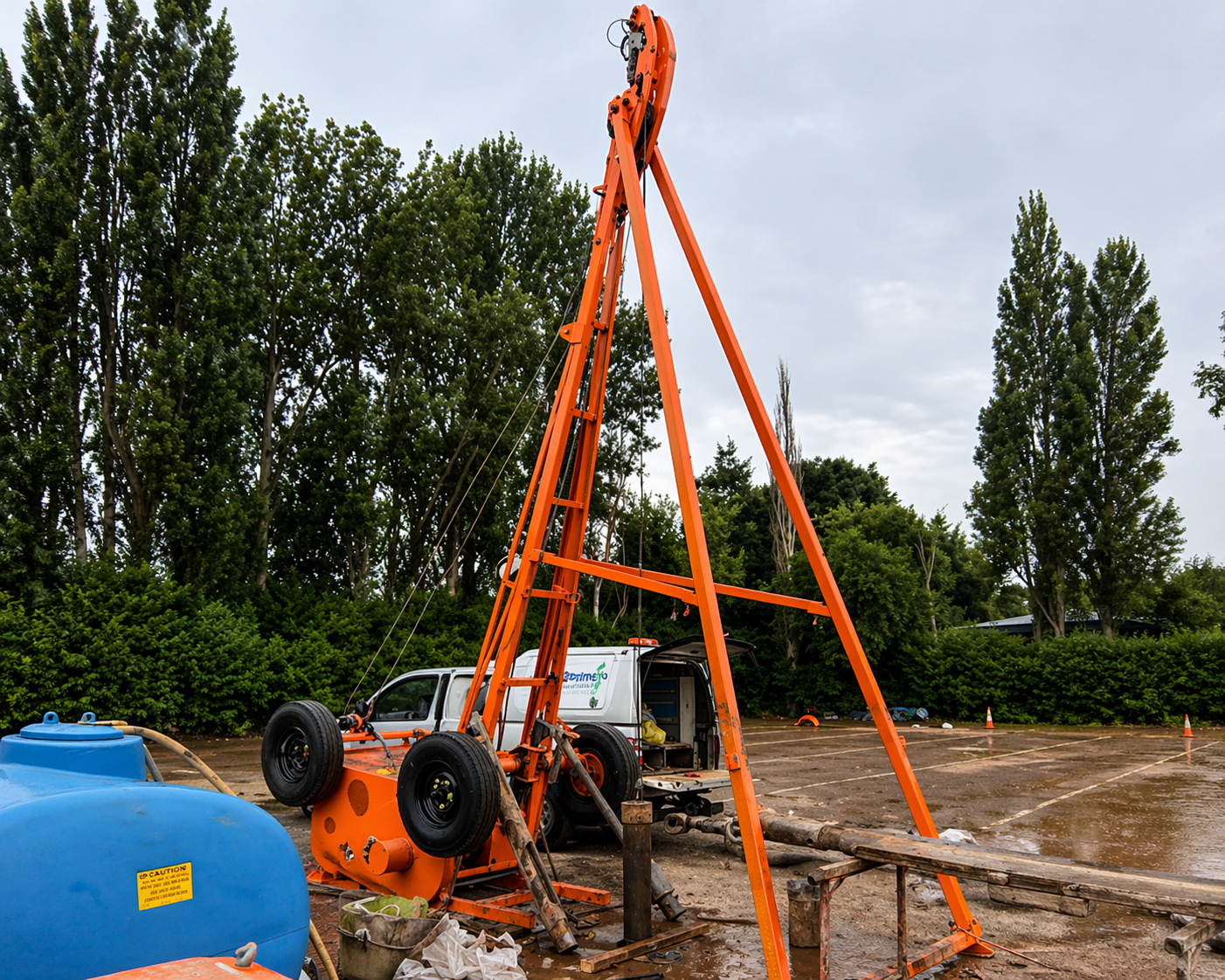
Cable percussion drilling — also known as shell and auger — is by far the most common method of drilling used for geotechnical site investigation in the UK. Typically reaching depths of up to 80m, with greater depths achievable using rotary drilling methods. Borehole diameters 150mm to 300mm.
Our rigs are powered by diesel engines and require a working headroom of around 6m and an area of 4–8 metres. All SPT equipment is regularly calibrated and holds adequate certification. Suitable for a wide range of soil and rock types.
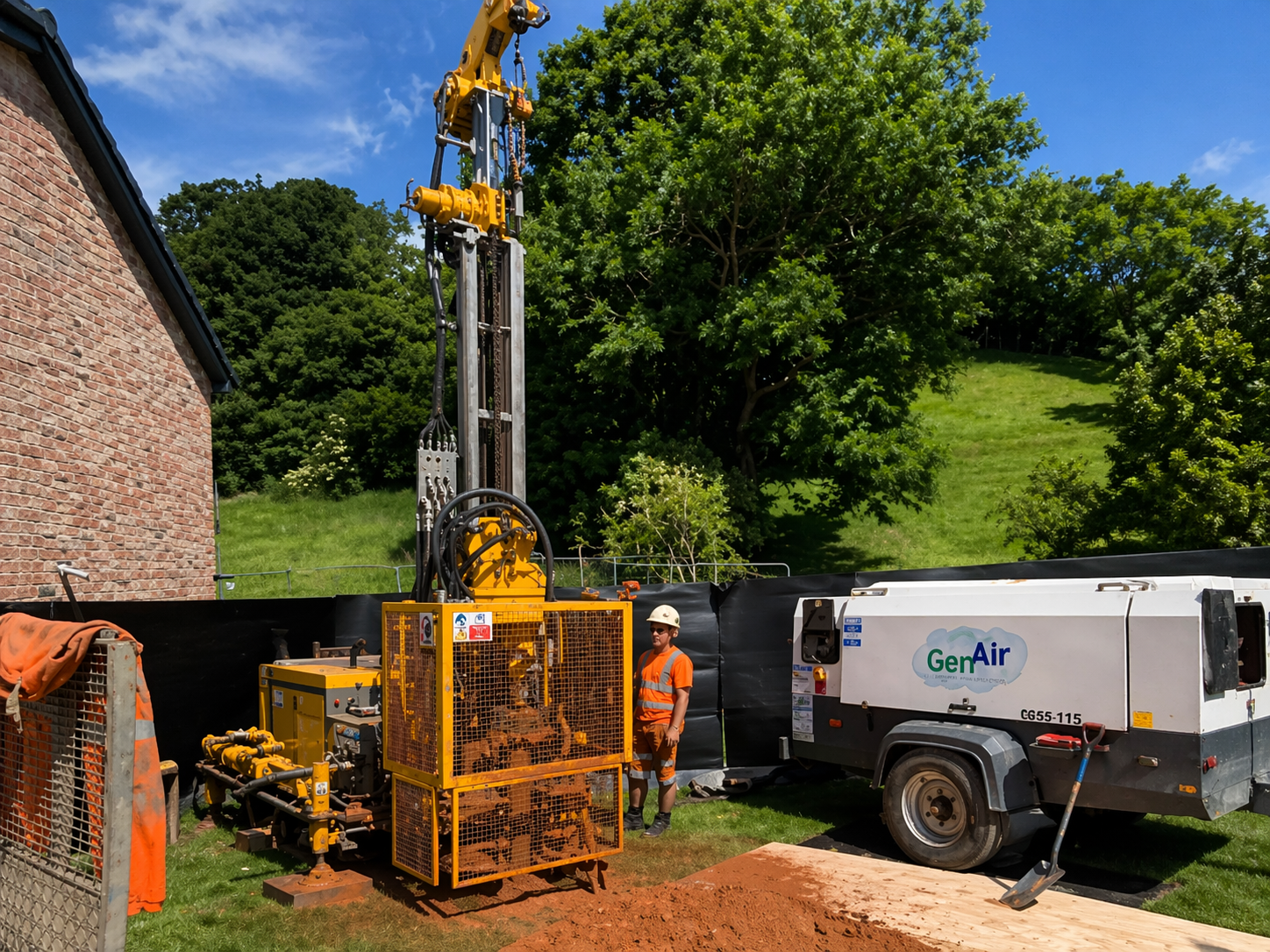
Rotary drilling uses a rotating drill string to penetrate soil and rock, reaching significantly greater depths than cable percussive methods. GeoPrime Solutions have drilled to 160m and beyond on geothermal projects — with no practical depth limitation where the programme demands it.
Rotary drilling is capable of penetrating all rock types and recovering continuous core samples. Often used alongside cable percussive drilling on the same programme — cable through superficial deposits, rotary at depth or on encountering rock.
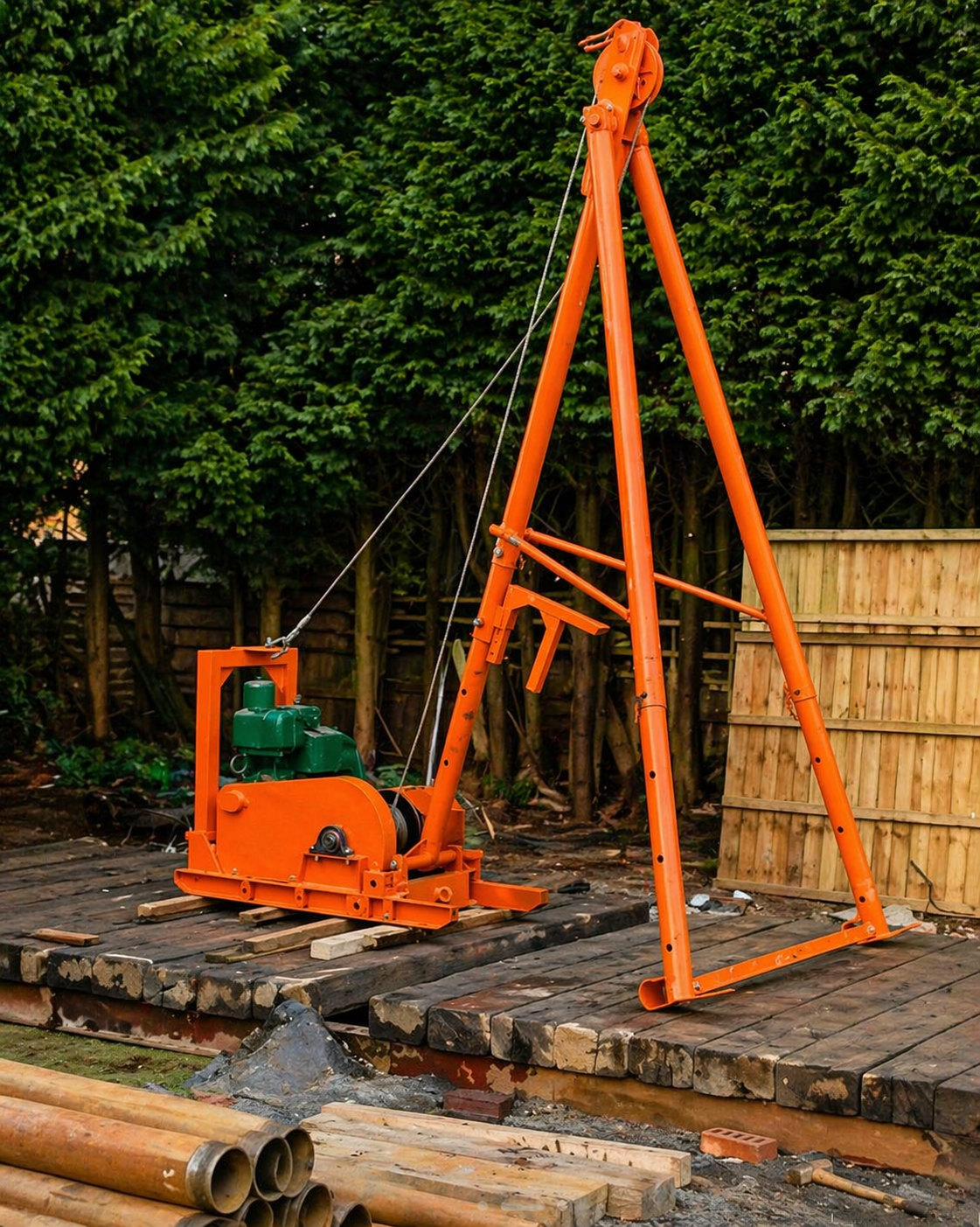
Cut down cable percussive drilling uses a reduced-height rig for sites with low headroom or restricted access — car parks, basements, undercrofts, warehouses — where a standard rig cannot operate.
The same cable percussive method is used, producing data of equivalent quality. SPT testing, soil sampling and in-situ testing all carried out in the same way. No compromise on data just because your site has access constraints.
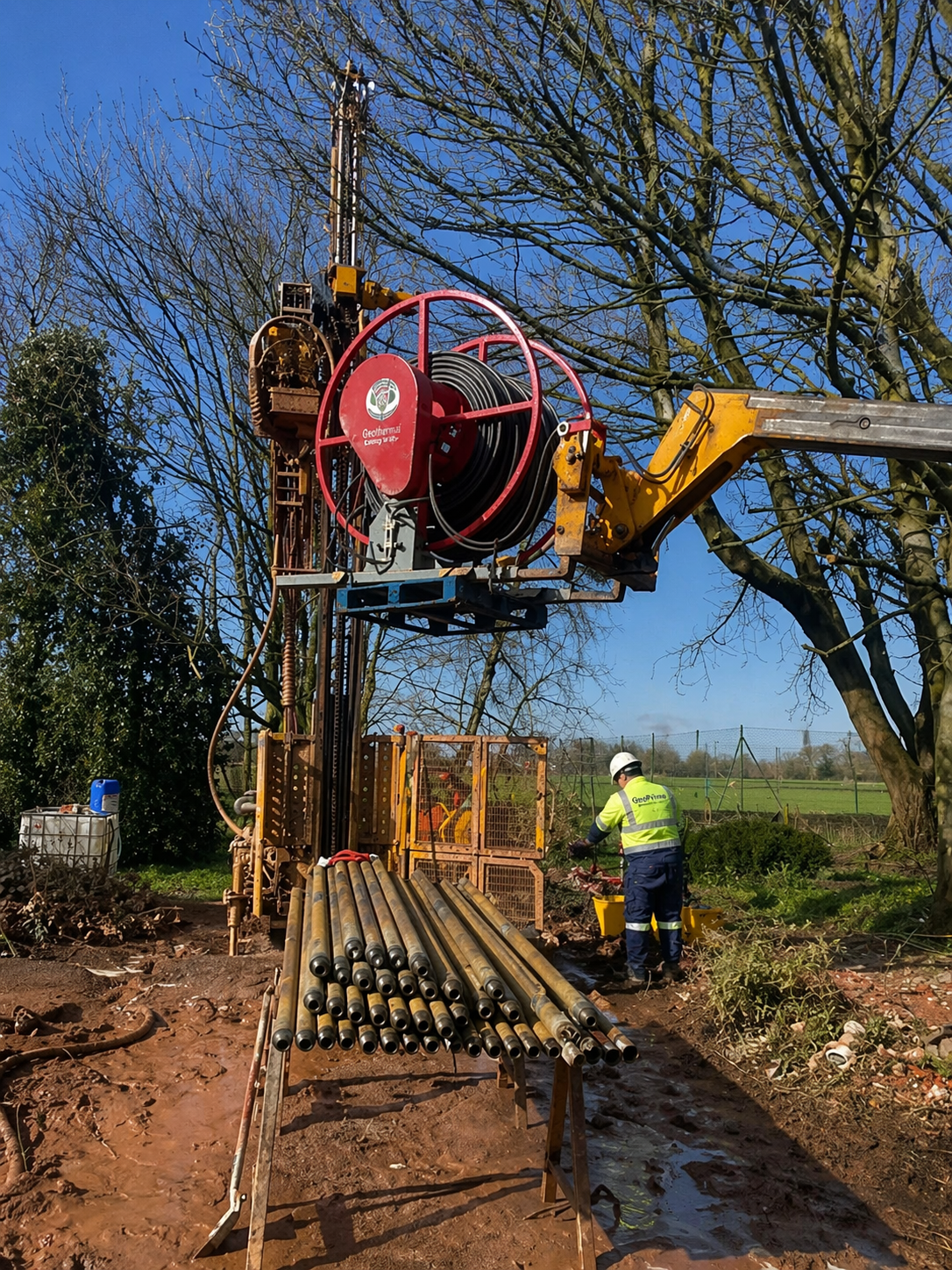
Deep borehole construction for ground source heat pump systems, district heating networks and renewable energy schemes. GeoPrime Solutions have drilled to 160m and beyond on geothermal projects — proven deep capability deployed across the UK.
We work alongside heat pump designers and M&E contractors to keep your project joined up from site investigation through to borehole completion and loop installation.
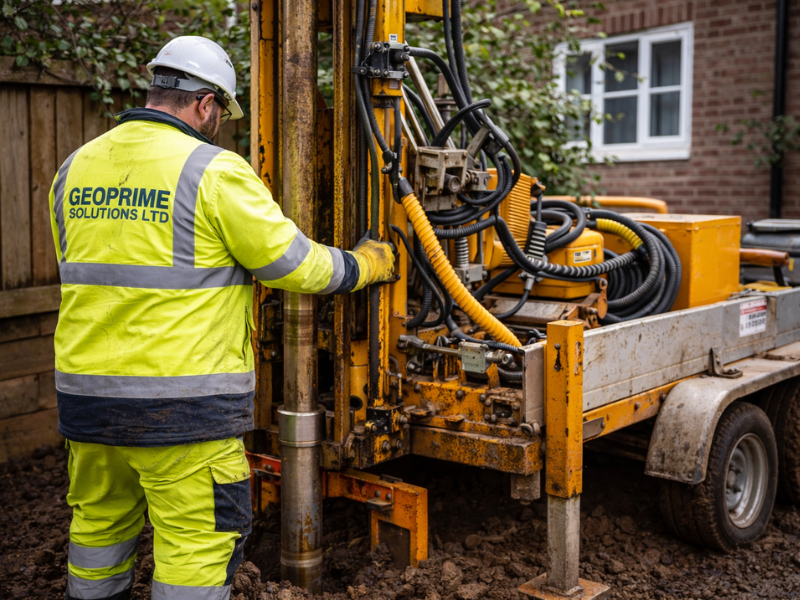
Windowless sampling is carried out by tracked percussive rigs using a steel tube with a plastic liner to recover the sample. Depths of up to 10m below ground level can be achieved depending on soil type. Our rigs have the facility to take SPT and CPT tests.
Window sampling is widely used for the investigation of contaminated land, geotechnical investigations, and the installation of ground gas and groundwater monitoring wells. A fast, cost-effective and versatile investigation method.
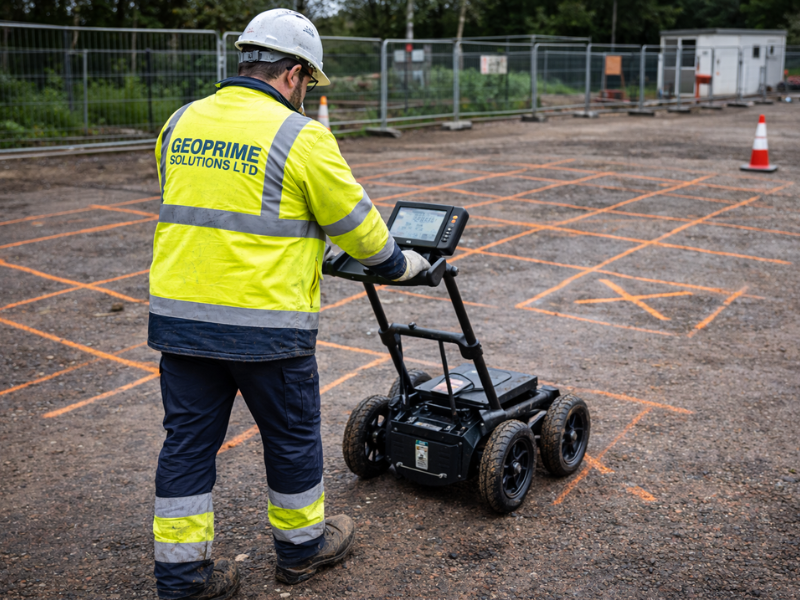
GPR uses electromagnetic radiation pulses to image the subsurface. Signals are reflected from features below the surface allowing engineers to identify buried utilities, voids, structures and other anomalies without excavation.
The use of Ground Penetrating Radar is mandatory in the majority of mapping surveys where non-metallic services could be present. A fast, non-destructive and highly accurate subsurface investigation technique.
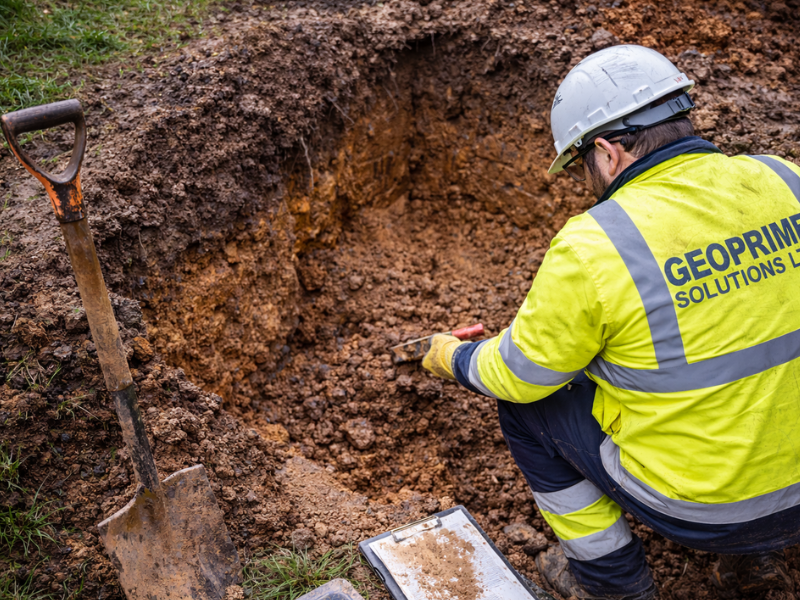
Trial pitting is carried out to a maximum depth of 4.5m using standard excavation plant or hand digging methods. Our engineers have a thorough knowledge of soil conditions and understand the mechanics of all associated testing.
Depending on the depth of the investigation, a variety of excavators can be deployed. We are able to perform a range of in-situ tests including CBR tests and plate bearing tests. Ideal for shallow foundation investigations and contaminated land assessment.
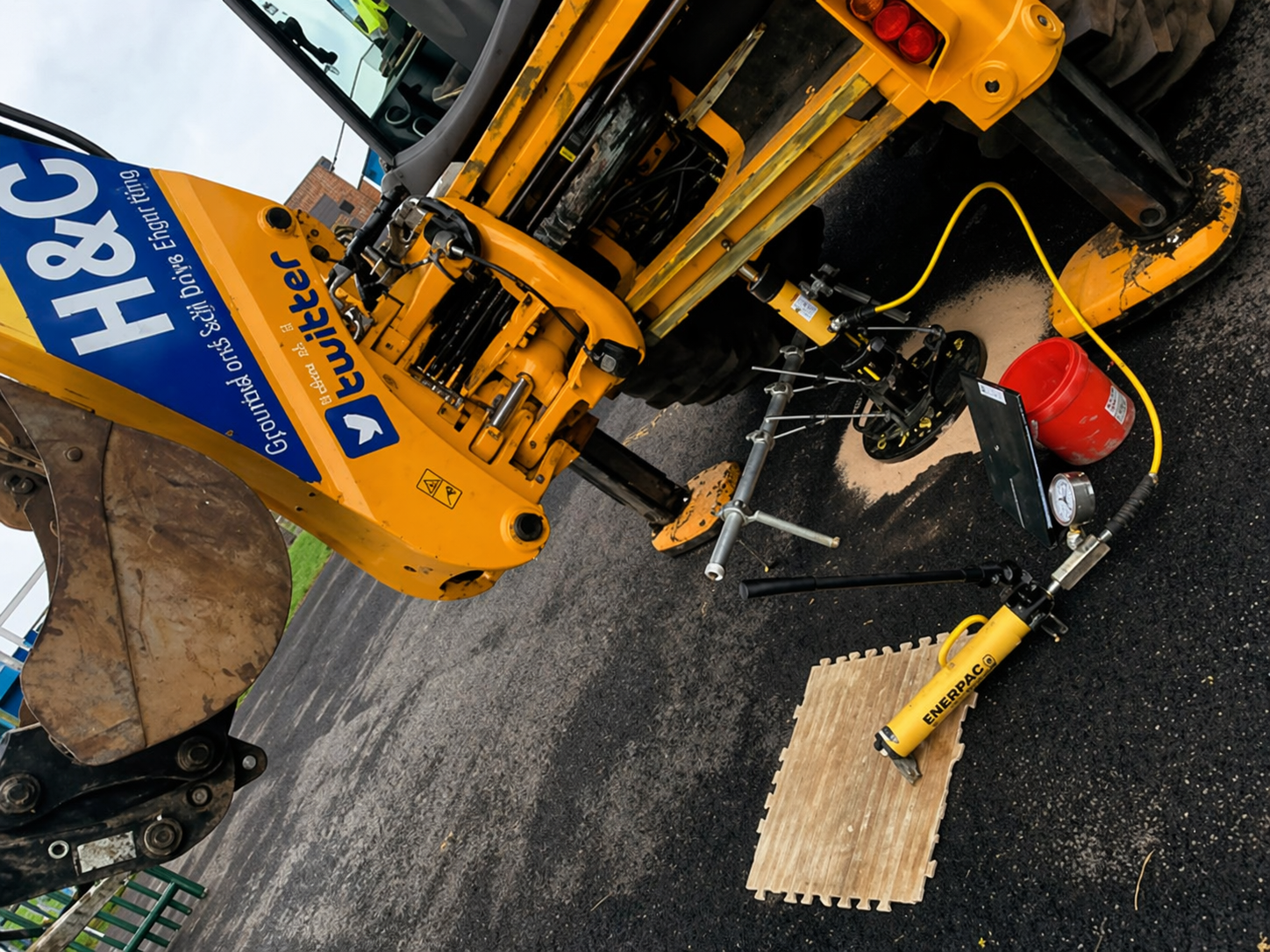
The California Bearing Ratio (CBR) test is widely used throughout the world to design roads, pavements and concrete slab foundations. It assesses the strength of sub-grade soils and provides the data needed to specify appropriate construction methods and materials.
We understand that confusion often arises between which test is required or how to read the results — that's where our expertise comes in. We carry out CBR and plate bearing tests across the UK and provide clear, practical interpretation of results.
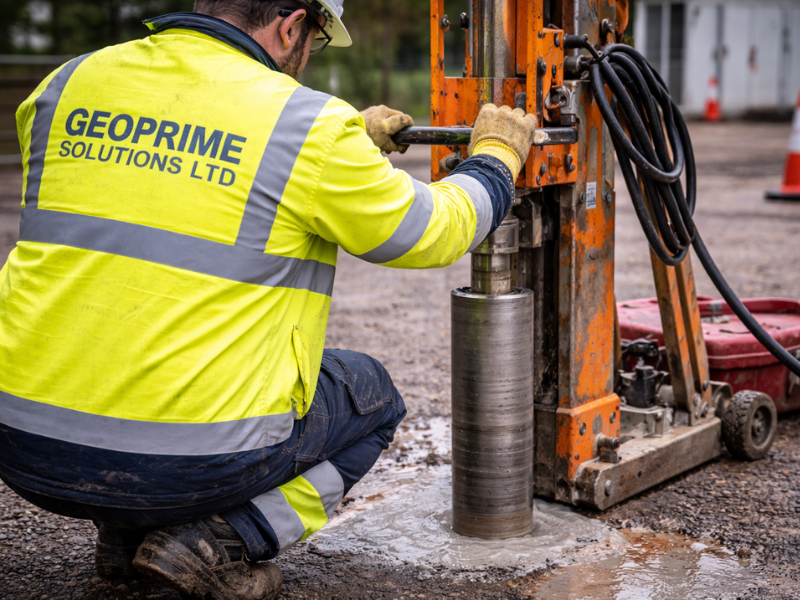
We are capable of drilling cores from 25mm to 300mm in diameter through most building materials including concrete, brick and stone. This work can be undertaken in very small spaces — including domestic properties — without leaving a significant mess.
Coring is commonly used by electricians, builders and plumbers to provide access holes for pipework and cables. It carries less risk to structures than traditional percussive drilling and produces clean, precise results in even the most confined spaces.
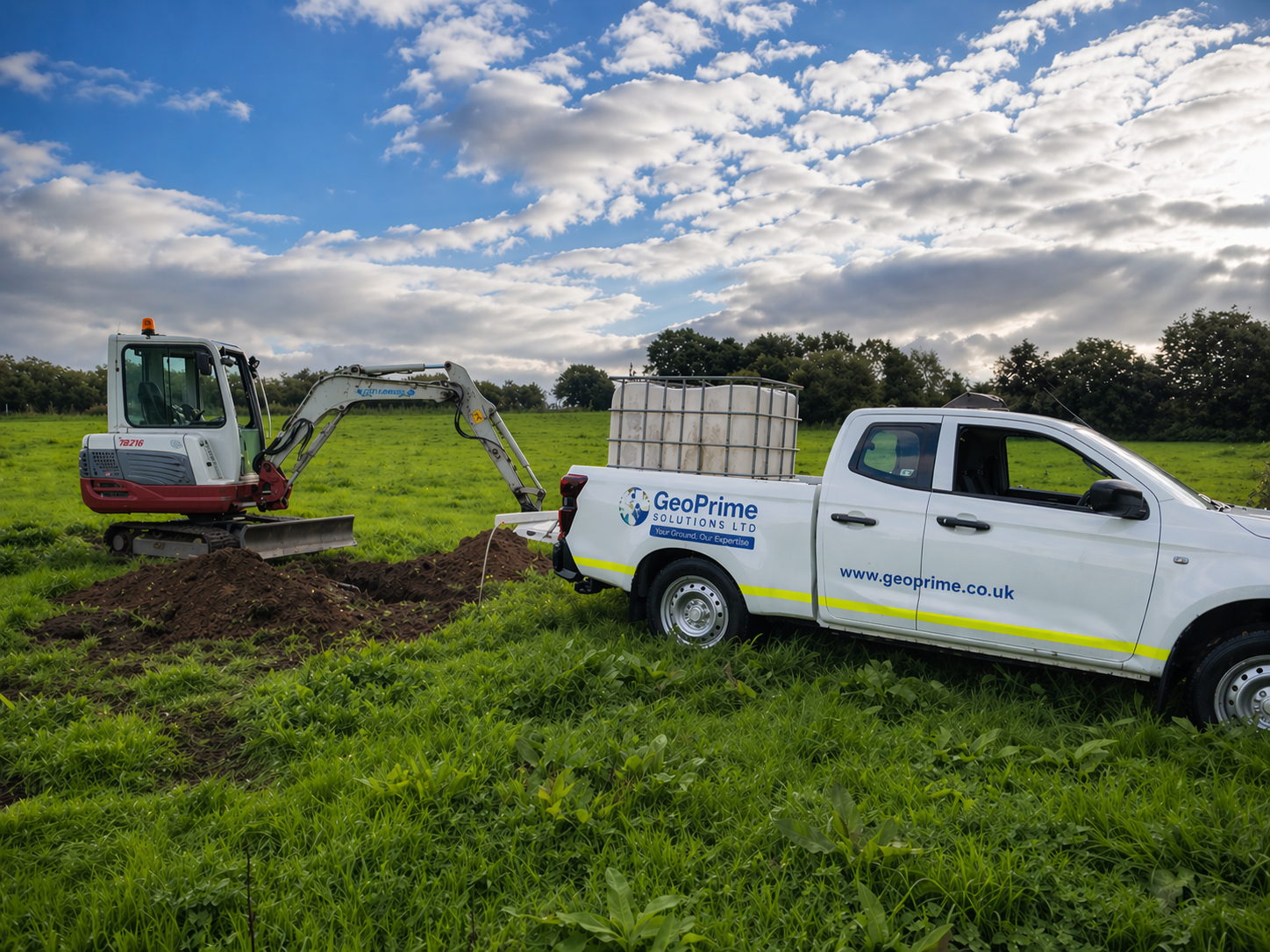
Infiltration testing to BRE Digest 365 to assess the capacity of the ground at a proposed soakaway location. The infiltration rate is calculated and presented in a clear report ready for submission to your drainage engineer or local planning authority.
Multiple tests at different locations can usually be completed in a single day. Soakaway testing can be combined with trial pitting or window sampling on the same site visit — saving time and cost on your programme.
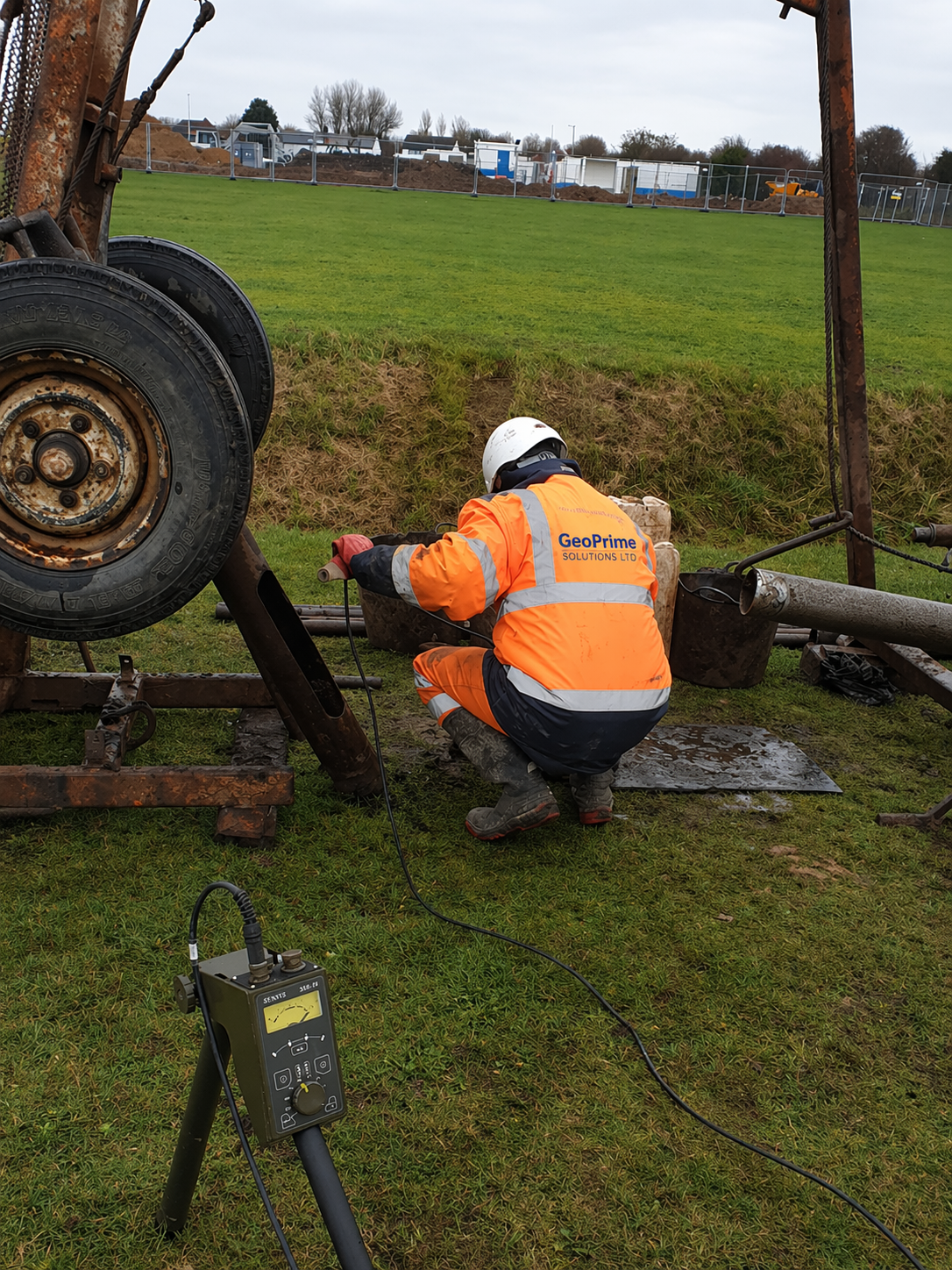
Where an assessed risk from deep buried unexploded bombs (UXBs) exists on your project and ground investigation works such as boreholes or window samples are planned, we can deploy a UXO Specialist to conduct a down-hole magnetometer survey prior to drilling.
This specialist service ensures your investigation programme proceeds safely where historical ordnance risk has been identified. Our UXO Specialists are experienced, qualified and integrated seamlessly into our standard investigation workflows.
We'll Find the
Right Method
for Your Site
Every project is different. Talk to our team and we'll assess your requirements and recommend the most appropriate and cost-effective investigation method.
Discuss Your ProjectFrequently Asked
Questions
Ready to Get
Started?
Call us or send an enquiry — we respond fast.